
Take ownership of your personal growth in faith
“Please, take ownership of your personal growth in faith.”
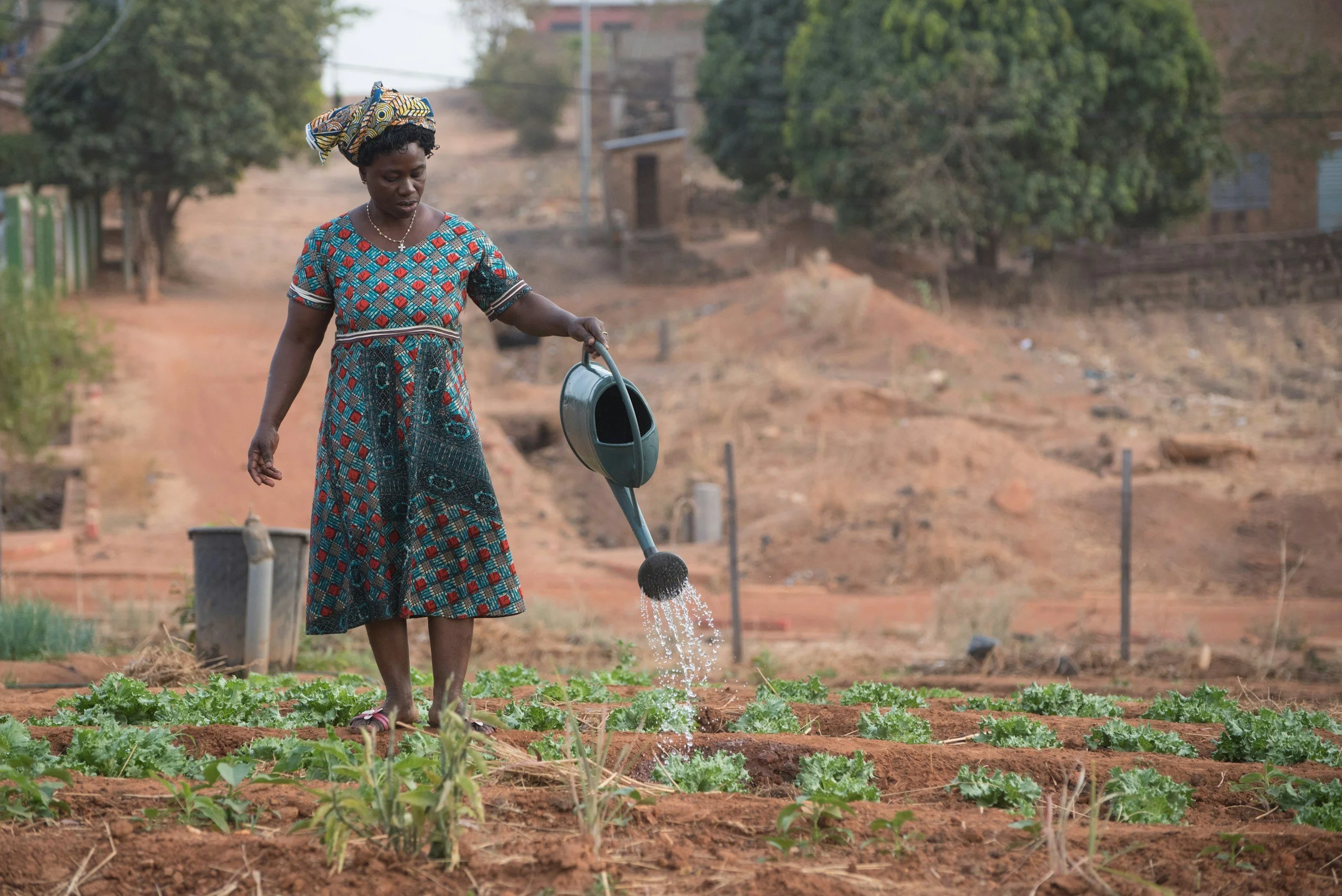
A woman with a beautiful cross necklace watering her plants
Let me clarify something from the start. Taking ownership of your growth in faith does not mean rebelling against what you have been taught or casually questioning everything you received as a child. It means refusing to remain spiritually passive when you are capable of growth.
A week ago, I asked my Confirmation candidates to prepare a class on confession. They had to explain what confession is, what happens during it (the acts of the penitent and of the priest), and what the Church says its effects are. Afterwards, they were to hold a debate: one group defending confession, the other challenging it.
One of the candidates from the group assigned to challenge confession came to see me. Their question was simple: if their role was to challenge it, why did they need to learn about it properly?
The answer is obvious: you cannot challenge what you do not understand. If you do, your arguments will be weak. You will collapse in front of someone who comes armed with knowledge.

This is not just about debates. It is about life.
Ignorance is not innocent. It is often arrogant. An ignorant person is frequently convinced that they are right, even when they lack the most basic understanding of what they are rejecting. It becomes pointless to reason with someone who has decided not to know.
Scripture says:
“My people are destroyed for lack of knowledge.”
Destroyed — not inconvenienced. Not slightly disadvantaged. Destroyed.
Faith cannot survive long on vague impressions, inherited habits or emotional attachment. It requires knowledge.
We often hear the phrase, “Knowledge is power.” But I prefer the words of Jesus:
“Even if I testify on my own behalf, my testimony is valid because I know where I have come from and where I am going.”
I prefer the words of Jesus because they highlight something important: how essential self-knowledge is. Jesus knew who He was, where He had come from, and where He was going. That knowledge gave coherence and authority to everything He said and did.
This is where your quest for knowledge must begin — with knowing who you are in the sight of God.

Why? Because identity grounds and guides your pursuit of knowledge. When you know who you are before God, you seek knowledge that aligns with that identity — knowledge that is rightly ordered, that draws you closer to Him and increases His grace in your life.
But knowledge can also be sought apart from God — from the wrong source, for the wrong reason, and toward the wrong end.
Consider the story in Genesis. The serpent offered knowledge to the woman — the knowledge of good and evil. It was knowledge detached from what God had commanded and pursued outside the order He had established. That knowledge did not elevate humanity. It led to the fall.
Likewise, not every knowledge available to you is worth acquiring.
When I speak of knowledge, I do not mean the accumulation of religious information. Information can inflate the ego without transforming the person.
Knowledge, in the true sense, produces understanding. Understanding produces wisdom. Wisdom produces action.
Knowledge is not acquired only through study, but through experience. Yet not every experience produces wisdom. Some experiences simply leave damage. Clarity about who you are before God protects you from seeking knowledge that harms rather than forms.
This is why clarity about who you are is so important. Self-knowledge acts as an anchor. It enables you to discern your sources of knowledge and your reasons for acquiring it. It guards you against seeking what will not serve your relationship with God.
Real and rightly ordered knowledge makes you a better servant of God. A better daughter, wife or mother. A better leader, worker, neighbour and citizen.
Ask yourself:
Why do I want to know this?
Will it help me grow?
Will it strengthen my relationship with God?
Will it shape my conduct?
Information that does not lead to transformation is distraction. If you have worked with children, you may recognise this. You are trying to teach something specific, and they begin asking questions — not about the lesson itself, but about something loosely related or entirely different. The questions are not necessarily wrong. They may even be interesting. But because they do not lead to understanding the subject at hand, they become a distraction from real learning.
Many people approach faith like this — collecting scattered religious information without ever arriving at deeper understanding. Taking ownership of your personal growth in faith means actively seeking the knowledge that strengthens your relationship with God. It means learning how God works, how He speaks, how He calls, and how He forms. It means accepting Him as He reveals Himself — not as you would prefer Him to be.
It also means recognising something sobering: the only knowledge you will carry beyond the grave is the knowledge of God. Everything else — career expertise, social awareness, cultural commentary — remains here.
Yes, those things matter. But they are earthly.
And yet many people invest far more energy in professional development than in knowing God.
They take courses.
They attend seminars.
They read books.
They sharpen their skills.

But when it comes to faith, they remain dependent on what they were taught at fourteen.
When you were a child, your parents were primarily responsible for your faith formation — not the Church, not the clergy, not the school.
Canon Law states:
“Parents have the most grave duty and the primary right to ensure the religious education of their children. ”
The Catechism teaches:
“Parents have the first responsibility for the education of their children.”
But you are no longer a child. So the question becomes: who is responsible now? You are.
Whatever you were not taught.
Whatever was poorly explained.
Whatever gaps remain.
At this point, whose fault it was is no longer the important question. The real question is this:
What are you prepared to do about it?
Will you continue to operate on inherited fragments?
Or will you intentionally deepen your understanding?
Taking ownership of your personal growth in faith means refusing spiritual laziness. It means refusing to reject what you have never studied. It means refusing to criticise what you do not understand. It means refusing to remain stagnant when growth is possible.
It means choosing to know God — seriously, intentionally and persistently.
Please, take ownership of your personal growth in faith.
Learn what you need to learn.
Seek what you need to seek.
Grow stronger, steadier and more faithful in your service to God.