
What It Means to Be a Lay Woman in the World
Welcome
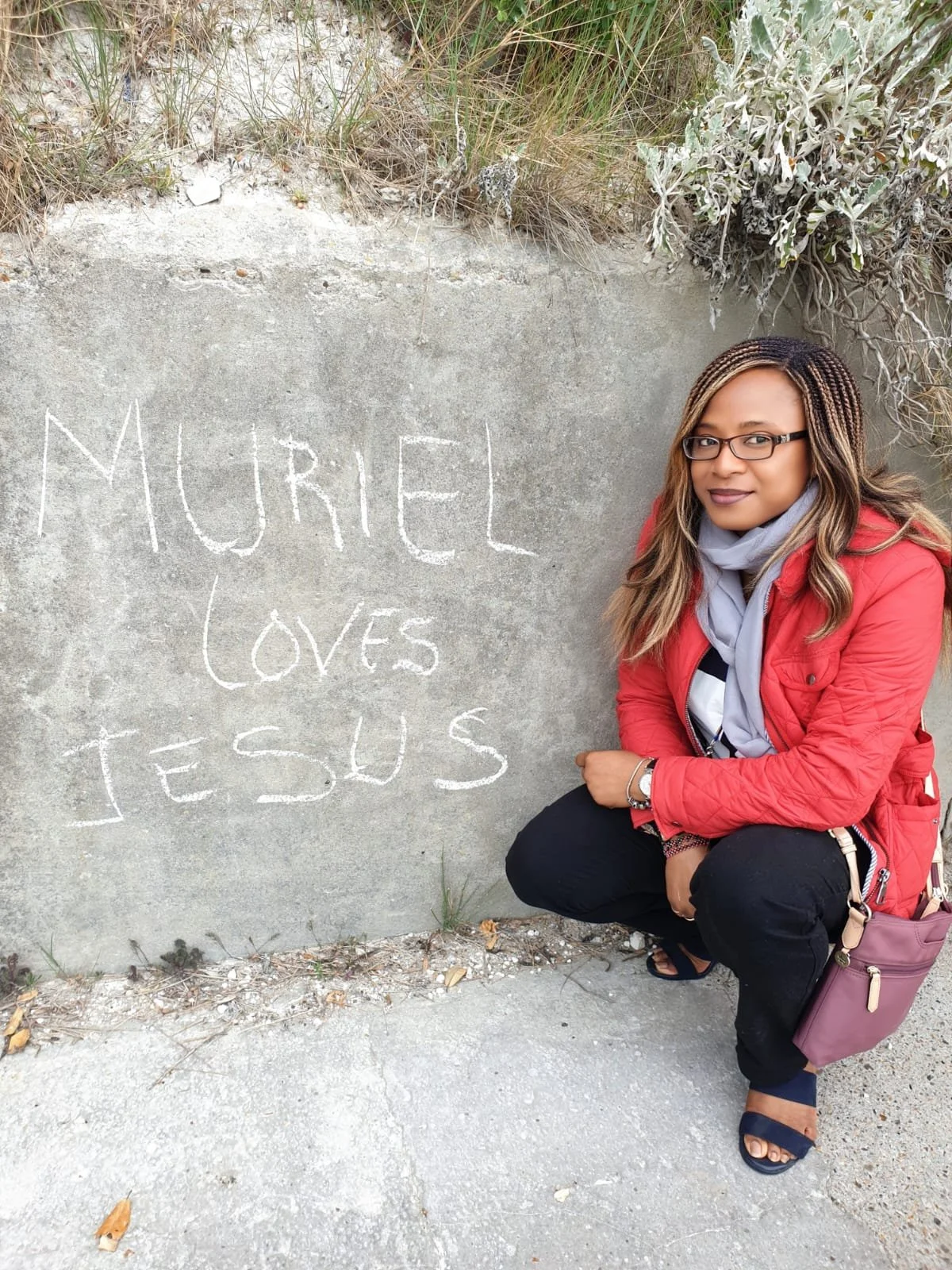
Hello, and welcome to my site. I am Muriel.
I am Catholic, but this site is open to all Christian women, not just Catholics, who profess faith in the Holy Trinity and who have been baptised in the Name of the Father and of the Son and of the Holy Spirit (Matthew 28:19), and who would like to actively work in daily life in the world for Jesus.
I have created this space because Caritas Christi urget nos —
“the love of Christ urges us on” — to exercise our apostolate in the vineyard of the Lord.
Now more than ever, it is a Christian necessity for every lay woman to realise, understand, and fully appreciate the key role they are impelled by the Holy Spirit to play in the building of a world that is pleasing to the Father. This is something we can do by undertaking lay apostolate in the world.
Being Sent Forth: An Extraordinary Grace
Apostolate refers to the activity by which the Church, through all her members, carries out Christ’s mission in the world. Etymologically, it means “one who is sent.”
There is nothing more amazing and rewarding than being sent by Christ. It is an extraordinary grace.
When God sends us, He does not only work through us for the benefit of others — He also works in us for our own salvation. The Holy Spirit uses us to transform the world, and in doing so, He transforms us from within, for:
“The Holy Spirit is the Master of the interior life.”
(CCC 1995)
The Interior Life and True Wellbeing
Whether we refer to it as health, wellness, wellbeing — or all three — for a Christian woman, good health, wellness, or wellbeing should first and foremost include a healthy interior life.
The good health, wellness, or wellbeing of this interior life is manifested by the Action of the Holy Spirit in her life — evident in the alignment of her life choices and actions with the Will of God.
The Church, the World, and the Risk of Withdrawal
Being a member of the Lord’s vineyard, the ekklesia (the Church), means sharing in the priestly, prophetic, and kingly mission of Christ on earth. For the laity especially, this mission unfolds in the world, in human society. We are not called to withdraw from it, but to transform it for the sake of God — from within.
When I speak of withdrawal, I do not mean a physical withdrawal from the world.
I mean a lack of awareness and intentional involvement that leads to a person’s presence having no real effect or impact — as if they were not even there. Like salt that has lost its saltiness, or a lamp lit and placed under a bushel basket (see Matthew 5:14–15).
Being baptised in Christ and empowered by the Holy Spirit has made you salt and a lit lamp for the world. Your presence anywhere should have a positive impact — more than that, a salvific impact. Not that you’re the one saving people because only God can save, but because God can use you to save.
And this is what I mean by withdrawal: a way of being — or of having become — in which your presence no longer produces what it is meant to produce, not only in the lives of others, but also in your own life.
There is also a spiritual dimension to this. Where Christian presence is lived intentionally, that portion of the world no longer belongs to evil — not that it ever truly did, but it is reclaimed visibly for God. When such presence is absent or ineffective, the world is left unchanged.
By not intentionally and willingly acting in the temporal order — that is, in family life, economic and professional structures, laws, politics, international relations, and in cultural and social life — for our own sanctification and for that of the world, we risk withdrawing from the very field that is the primary place of lay apostolate.
To clarify: a person cannot sanctify themselves. Only God sanctifies.
But right and intentional actions make way for the Holy Spirit to effect our sanctification.
The World as the Field of Lay Apostolate
It is a great thing to provide ecclesial assistance at church. However, as a lay woman, I have an obligation to keep my mission in the world clearly in mind.
The Decree Apostolicam Actuositatem of the Second Vatican Council states:
“God’s plan for the world is that men (and women) should work together to renew and constantly perfect the temporal order.”
The decree continues:
“The apostolate in the social milieu, that is, the effort to infuse a Christian spirit into the mentality, customs, laws, and structures of the community in which one lives, is so much the duty and responsibility of the laity that it can never be performed properly by others.”
Furthermore, the central document of the Council, Lumen Gentium, states:
“The laity, by their very vocation, seek the kingdom of God by engaging in temporal affairs and by ordering them according to the plan of God. They live in the world, that is, in each and in all of the secular professions and occupations. They live in the ordinary circumstances of family and social life, from which the very web of their existence is woven. They are called there by God that by exercising their proper function and led by the spirit of the Gospel they may work for the sanctification of the world from within as a leaven.”
Personal Responsibility and Individual Apostolate
Actively and intentionally acting in the world for Christ is intrinsic to our identity as Christians and to our status as lay people.
There is no substitution for our personal responsibility to exercise our individual apostolate in the world. This responsibility cannot be delegated or outsourced to institutions, organisations, or even charitable structures — simply because institutions cannot love; people do. Structures cannot witness to Christ by their life; people do.
A Gentle Invitation
I invite you to develop the awareness that:
“You’re a Christian, and everything you do in your everyday life matters — because you matter.”
What does being a lay woman in the world mean to you?
It is up to you to begin considering what it means for you to be a lay woman in the world.
If you need assistance in understanding or discerning what, how, and where you can exercise your lay apostolate in daily life — in your family, at work, in your social and cultural life, or in civic and political life — please do not hesitate to reach out to me.
Caritas Christi urget nos — the LOVE OF CHRIST urges us.
I strongly believe that, like the perfect Model in how a woman can serve God, i.e. the Mother of Jesus, women of faith make extraordinary instruments of God’s Will in the hands of the Holy Spirit. And this is why my focus in this work is especially on women — of all ages: girls, teens, young adults, and mature women.